

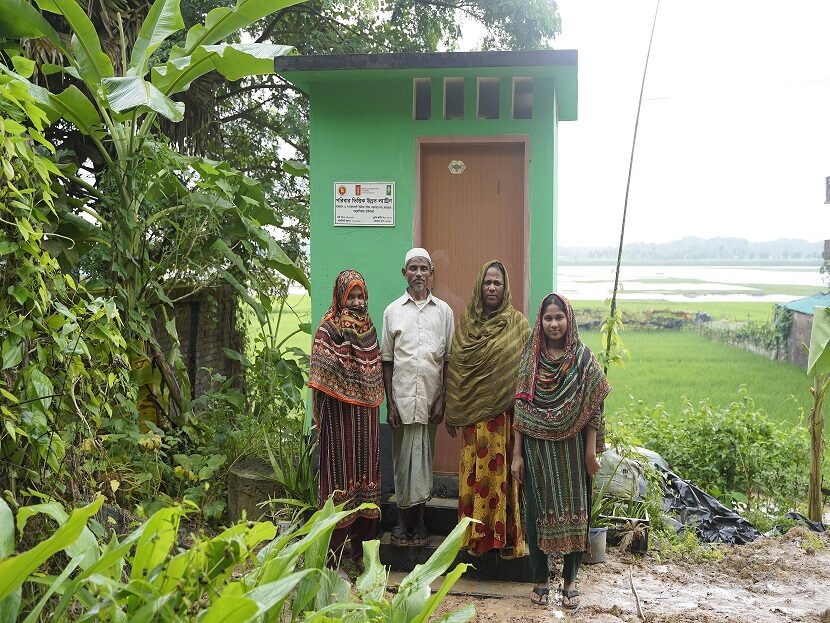
For Mohammad Alam and Khaleda Begum, sanitation was not just a household concern. It was a daily source of stress and insecurity. Living in Bharuakhali village of Cox’s Bazar with their ten children, the family survived on Alam’s small income as a sweeper and Khaleda’s earnings from domestic work in other households. Meeting basic needs was already difficult, and safe sanitation remained far out of reach.
The family’s old latrine was in critical condition. Broken, unsafe, and unhygienic, it posed serious health risks for everyone in the hou sehold. For their nine daughters, the lack of privacy and safety was especially distressing and affected their comfort and dignity.
During a community assessment, HYSAWA identified the family as among the most vulnerable in the village. Recognizing their urgent need, HYSAWA installed an improved household latrine. The new facility immediately transformed their daily lives by providing cleanli ness, safety, and a secure space that restored dignity, particularly for the girls.
This support was delivered through HYSAWA’s ICAR project, which focuses on improving sanitation for vulnerable rural communities. Beyond construction, the project emphasizes awareness and behavior change. HYSAWA Community Organizers conduct regular village visits, organize courtyard sessions, and encourage families to adopt low-cost, safe sanitation practices.
Between 2024 and 2025, HYSAWA constructed 610 improved household latrines, benefiting approximately 3,660 people. Additionally, 3,151 families upgraded their own sanitation facilities after participating in awareness sessions. Together, these efforts are helping rural communities move toward healthier and more dignified living conditions.
Case study collected by Mostafa Mohammad Tahan, Media & Communication Officer, HYSAWA, February 2026.